Blog

XY-TEK is a high-tech company specializing in the development, manufacturing, and sales of accurate and reliable ultrasonic flow sensors/flow meters. We specialize in flow rate measurement for small tubing and low flow rates in medical devices, bioprocessing, beverage and drink filling, industry automation, etc. XY-TEK also offers ultrasonic flow sensors, vortex flow meters, and bubble detectors OEM.
Clamp‑on and in‑line ultrasonic flowmeters, pros, cons, and best‑fit applications.
Ultrasonic flow rate measurement in brief
Ultrasonic meters determine volumetric flow by relating fluid velocity to the pipe’s known geometry. They can measure accurate flow rate without internal moving parts, leveraging modern signal processing and diagnostics to achieve high repeatability and strong stability. Two common ultrasonic flow rate measurement methods are:
1.Ultrasonic Transit-time : Compares upstream vs. downstream pulse travel times; the difference scales with flow velocity.
2. Doppler: Uses the frequency shift from sound reflected by particles or bubbles to infer velocity.

Ultrasonic flow sensors / flow meters are normally in two physical formats:
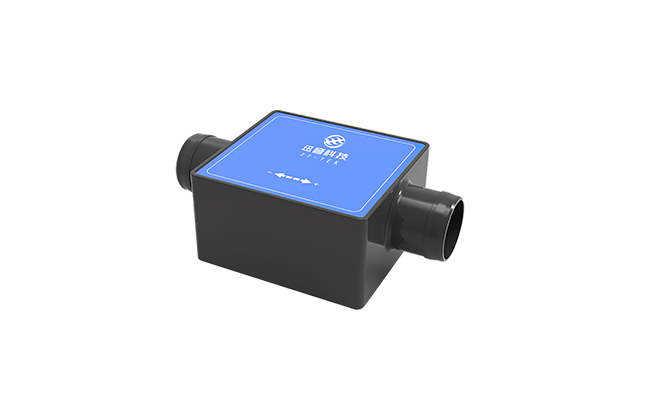
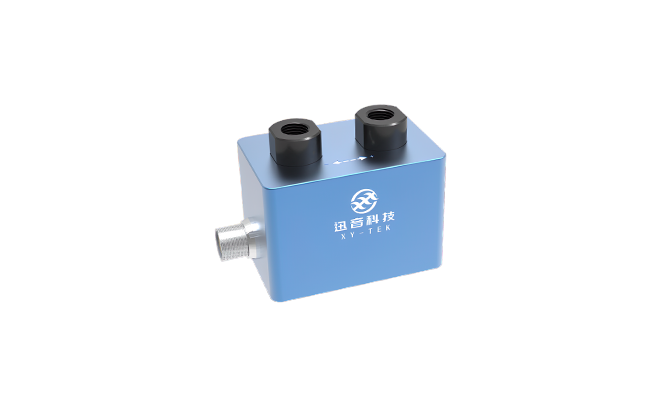
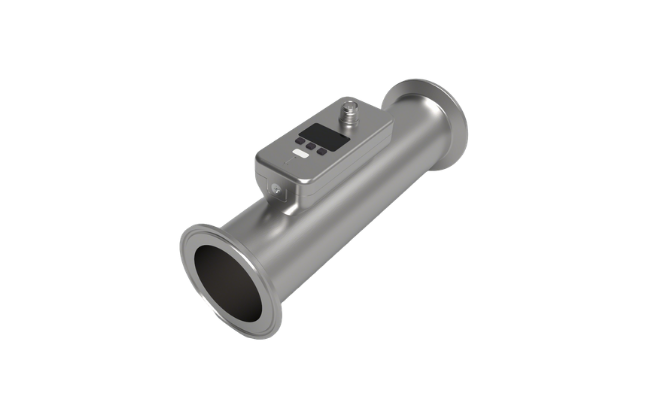
1.In-line: The sensor is part of the fluid path.
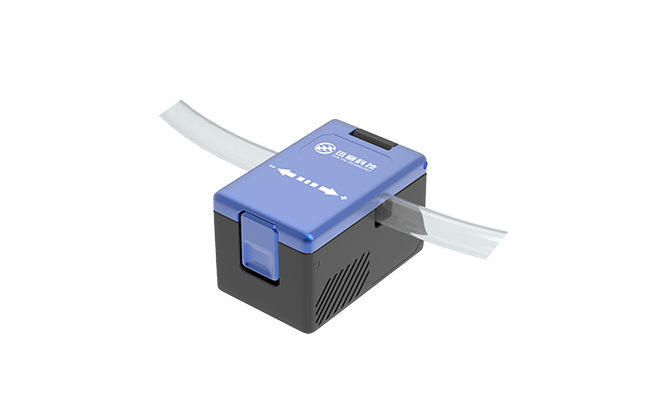
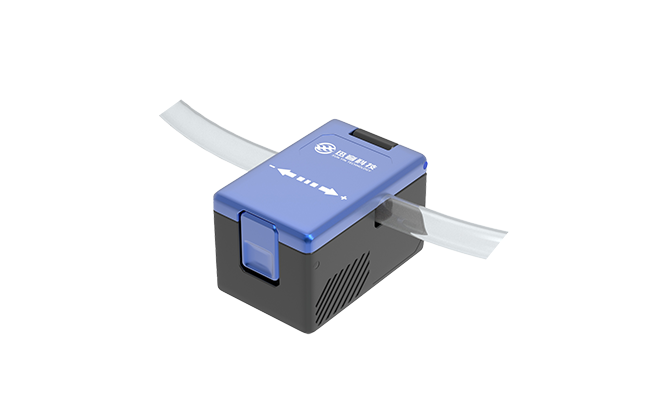
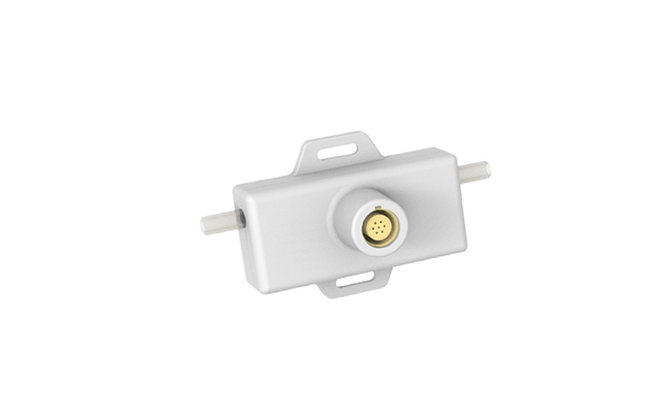
2.Clamp-on: The sensor is attached to the exterior of an existing tubing 


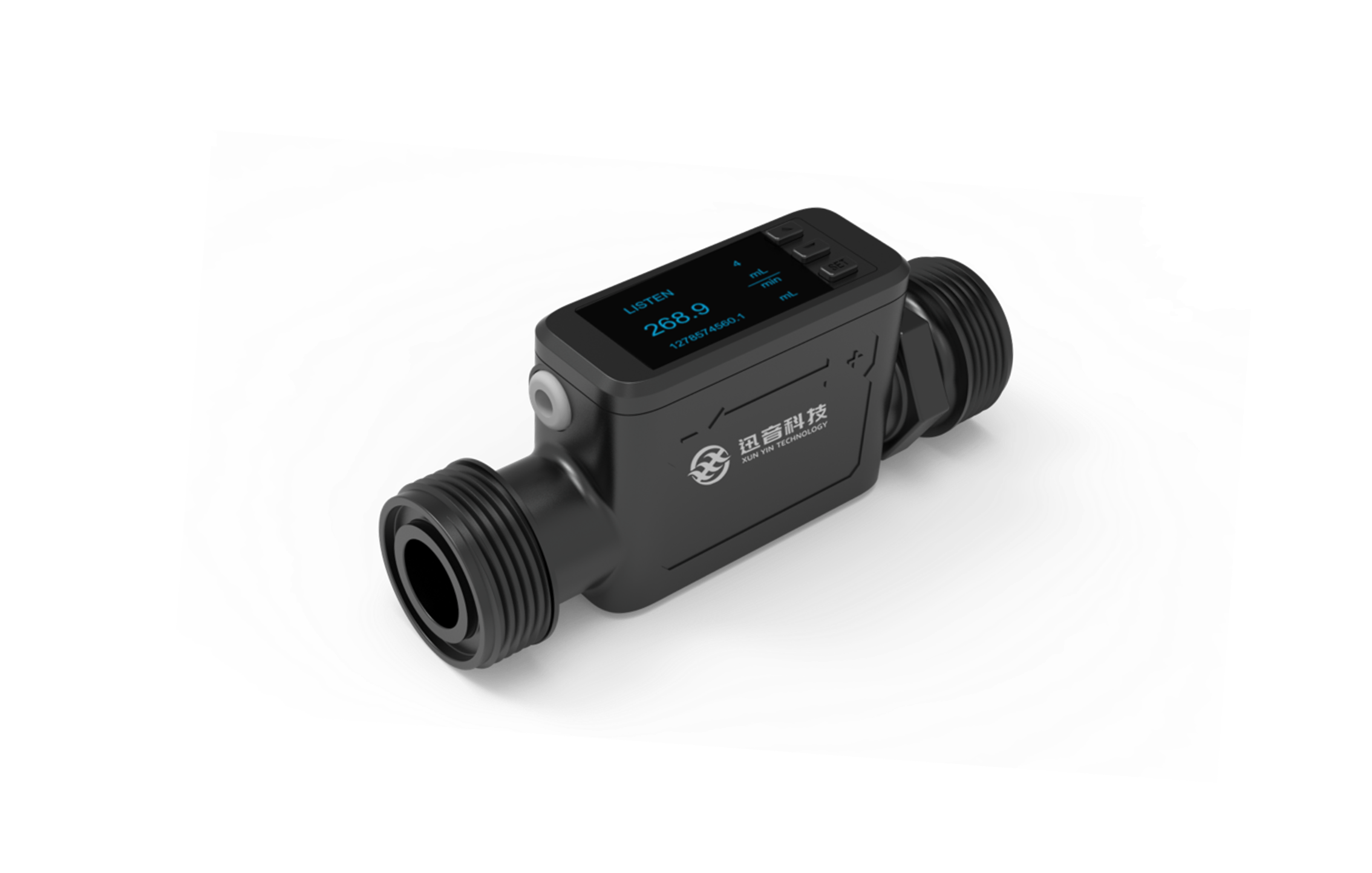
in-line flow senso

In-line Ultrasonic Flow sensor / Flowmeters
Advantages
1.High adaptability, broad media compatibility
Measures water, wastewater, solutions, chemicals, edible oils, and some compressed gases; largely insensitive to conductivity and optical transparency.
2.Low pressure loss, energy-friendly
No throttling elements in the flow path; very low local resistance coefficient, ideal where energy consumption or system head must be preserved.
3.Flexible installation, low retrofit cost
Supports flange, clamp, threaded, and welded connections; compact form factor integrates easily into existing fluid system.
4.High accuracy up to 2%.
5.Low maintenance
No moving parts—no components wearing, support measurement of liquid with small amounts of particles or bubbles. Corrosion‑resistant materials for long service life.
6.Intelligent features
Built‑in self-diagnostics function. Multiple outputs (4–20 mA, pulse, Modbus) for easy integration with automation and control systems.

Disadvantages
1.Tubing modification cost: Installation typically requires cutting or inserting a spool piece, potentially causing shutdown, draining, or added fittings—raising time and cost.
2.Higher service intervention: Maintenance often requires stopping production or removing tubing sections.
3.Fixed location: Not easily relocated once installed; unsuitable for frequently changing flow rate measurement points.

Applicability Conclusion
Choose the in-line ultrasonic flow sensor when flow rate measurement accuracy, long-term stability, and traceability are top priorities. Upfront purchase costs are higher, but the total use and maintenance costs are low, often offsetting the initial investment quickly.
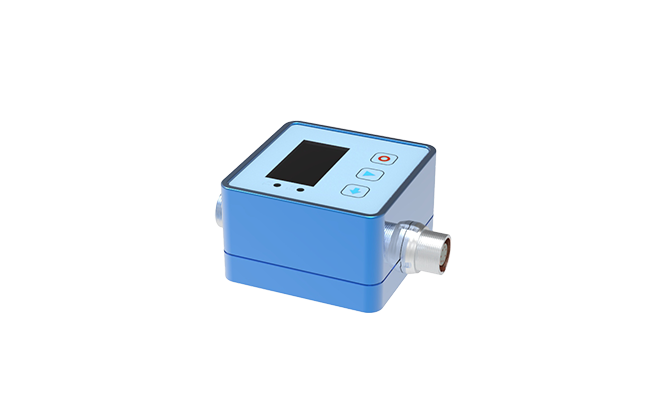
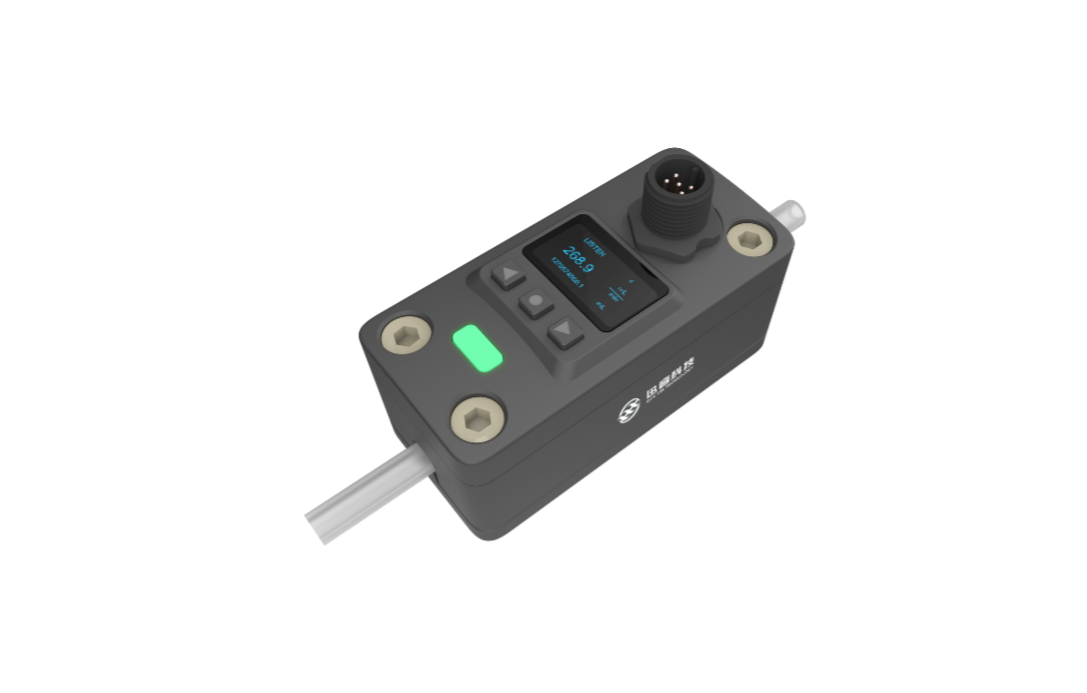
clamp on flow sensor
Clamp-on Ultrasonic Flow Sensor/ Flow Meters

Advantages
1.Non-invasive installation: No tub cutting, no breach of the ongoing process, and no changes to the tubing —ideal when the process cannot be interrupted.
2.Fast deployment: Quick to install even in tight or complex spaces; maintenance or replacement can be performed without stopping equipment or production lines.
3.Portable and reusable: XY-TEK clamp flow sensors / flow meters can be rotated across multiple points for temporary flow rate measurements and  spot flow rate checks.
4.Low installation cost: No tubing modifications—installation expense and schedule are typically much lower than in-line flow sensor / flow meters.

Disadvantages
1.Accuracy limitations: Sensitive to tubing thickness, ID, material, internal scaling, and flow materials; overall uncertainty is usually higher than in-line.
2.Recalibration needs: Changing tubing or fluid often necessitates recalibration.
3.Tubing condition dependency: Thick insulation, thick walls, or acoustically attenuative materials weaken coupling; tubing material mismatch can introduce accuracy error.
4.Interference risk: Nearby electromagnetic equipment or tubing characteristics may cause signal interference, affecting stability.

Applicability Conclusion
When “no system shutdown, minimal modification, flexible relocation, and rapid deployment” are primary goals, clamp-on ultrasonic flow sensors / flow meters offer clear benefits. While achievable accuracy is constrained by tubing and fluid conditions, the clamp on flow sensor / flow meter flexibility drives broad adoption across industries.

How to choose 
1.Can the process be shut down/drained for modifications? If not, favor the clamp-on flow sensor / flow meter 
2.Flow Sensor Lifecycle Cost: Weigh one-time installation expense against total ongoing maintenance cost.

3.Flexibility: If needed portable flow rate measurements or frequent relocation of measurement points , favor the clamp-on flow sensor / flow meter 


For more flow sensor / flow meter information, please visit the XYTEK website at  https://xy-tek.com/Products/show?id=9
Contact XY-TEK ultrasonic flow sensor team at global@xy-tek.cn

XYTEK engineers would be delighted to arrange the flow sensor/flow meter demonstration or provide further information to help make the flow meter selection choice.

Hot Recommendation

Inquiry

Submit

Have questions or need assistance? Contact us-we're here help!

  • Your Name *
  • Company *
  • Your Email *
  • Phone Number(Optional)
  • Message *

All rights reserved © Shanghai Xunyin Technology Co., Ltd